Do Pets Think Like Us?
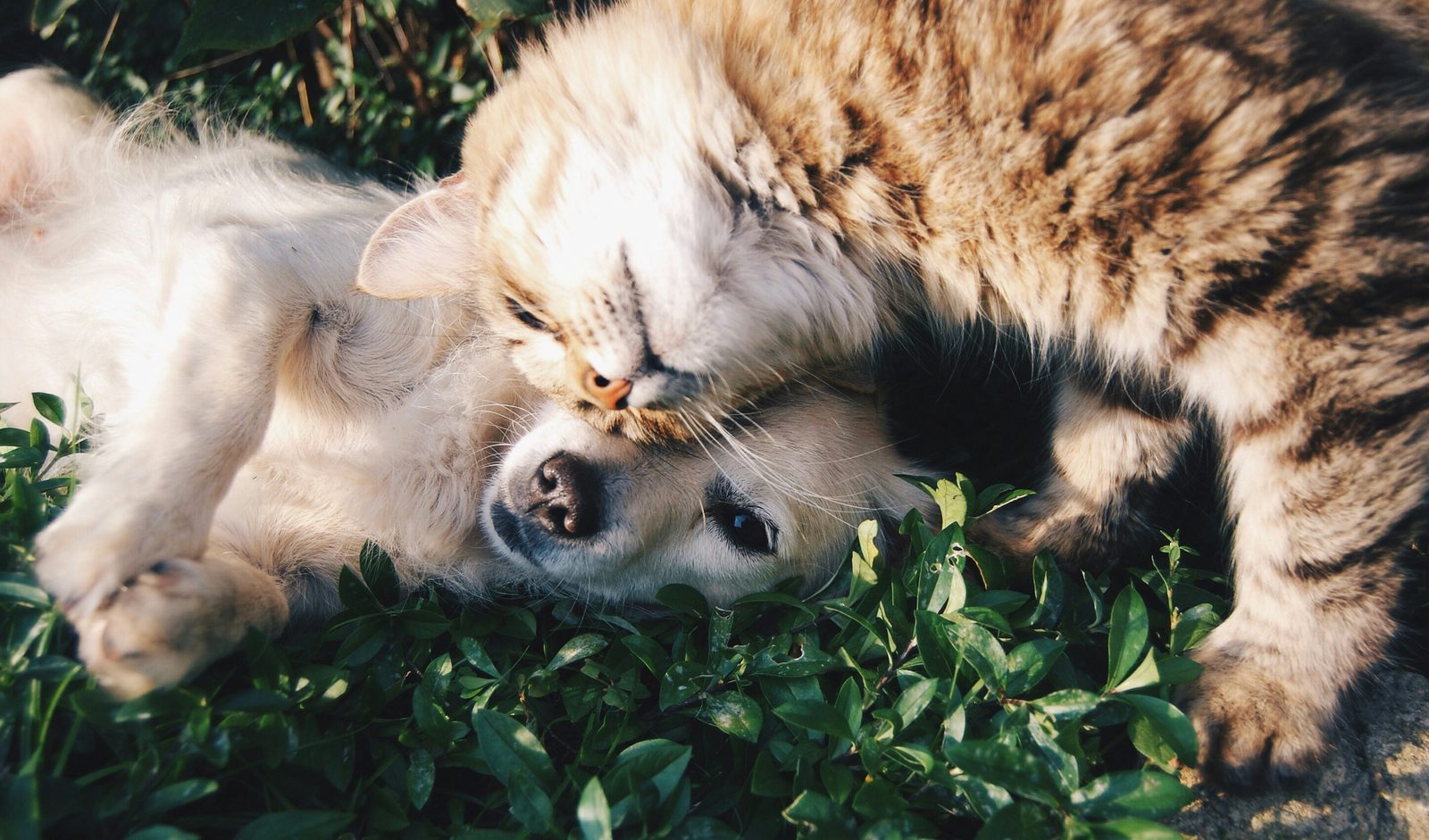
When your dog tilts her head or your cat stares at you with unblinking eyes, it’s hard not to wonder: do pets think like us? For centuries, philosophers argued that animals were mere machines, acting on instinct rather than thought. But modern research paints a more complex picture. Pets may not think exactly like humans, but they share surprising cognitive and emotional capacities that shape the unique bonds we form with them.
One of the most studied aspects of animal cognition is the ability to recognize and respond to human emotions. Dogs, for example, can distinguish between happy and angry human faces, and they react differently depending on the expression (Müller et al. 2015). This sensitivity is not just conditioning; it suggests a kind of empathy, the capacity to read cues and adjust behavior accordingly. Cats, often considered more independent, also show similar abilities. A study found that cats can use their owners’ emotional expressions as information when faced with unfamiliar objects, a process known as “social referencing” (Galvan and Vonk 2016).
Animal cognition goes beyond emotional reading. The concept of “theory of mind”, which is the ability to understand that others have thoughts and intentions, has been tested in dogs with fascinating results. In classic experiments, dogs choose food hidden in a container that humans can see, ignoring the one humans cannot see, suggesting they understand something about human perspective (Hare et al. 2002). While this does not mean dogs fully grasp human consciousness, it indicates they have evolved cognitive skills finely tuned to living alongside us.
The bond itself may be as important as cognition. Neuroscientific studies reveal that interactions with pets trigger oxytocin release in both humans and animals, the same hormone that promotes bonding between parents and infants (Nagasawa et al. 2015). This feedback loop explains why simply making eye contact with a dog can feel emotionally powerful. In this sense, pets may not just “think” like us, they feel with us.
Yet it’s important to recognize the limits. Pets do not think in human language, and their cognition is shaped by different evolutionary pressures. A cat’s hunting instincts or a dog’s herding drive are forms of intelligence, but not directly comparable to human reasoning. Anthropomorphizing, the behavior of assuming pets think exactly like humans, risks misunderstanding their needs.
Still, the science is clear: our pets are not blank slates of instinct. They are cognitive and emotional beings capable of complex forms of recognition, empathy, and attachment. The question “Do pets think like us?” might be less important than another question: “Do pets think with us?” The evidence suggests they do, and that’s what makes the human-animal bond so profound.
Sources
Galvan, Megan, and Jennifer Vonk. “Man’s Other Best Friend: Domestic Cats (F. Silvestris Catus) and Their Discrimination of Human Emotion Cues.” Animal Cognition, vol. 19, no. 1, 2016, pp. 193–205.
Hare, Brian, et al. “The Domestication of Social Cognition in Dogs.” Science, vol. 298, no. 5598, 2002, pp. 1634–1636.
Müller, Corsin A., et al. “Dogs Can Discriminate Emotional Expressions of Human Faces.” Current Biology, vol. 25, no. 5, 2015, pp. 601–605.
Nagasawa, Miho, et al. “Oxytocin-Gaze Positive Loop and the Coevolution of Human-Dog Bonds.” Science, vol. 348, no. 6232, 2015, pp. 333–336.